Registered Office: Paradigm Shift Consulting Ltd,The Old Mill, 9 Soar Lane,Leicester, LE3 5DE, United Kingdom

Paradigm Shift Consulting Logo

0330 133 0920

Paradigm Shift Consulting Logo

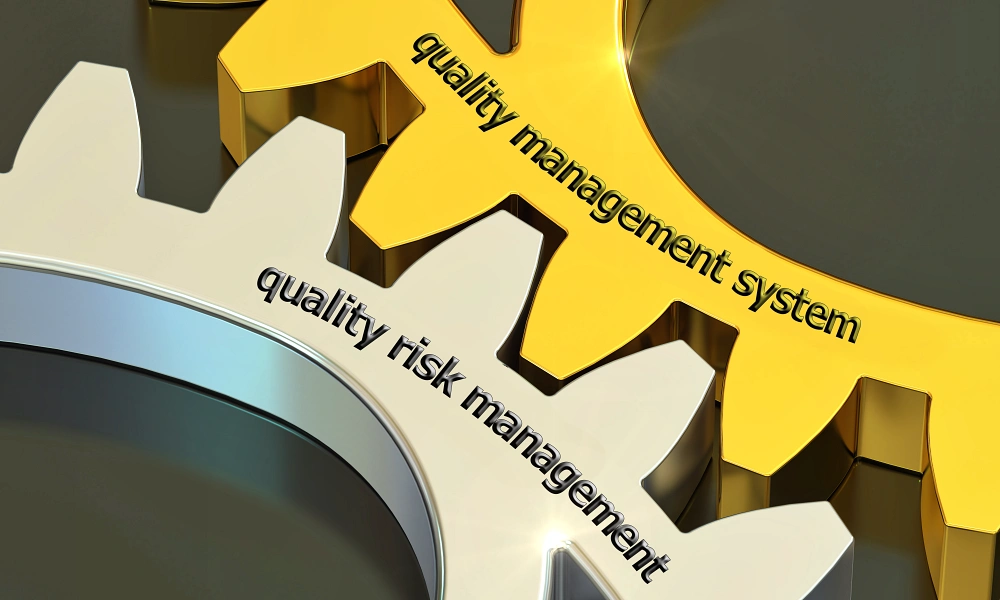
Integrating your Quality Risk Management into your QMS

Quality Risk Management (QRM) is not just a “nice-to-have” in Good Distribution Practice (GDP), it is a minimum expectation rooted in National law, guidance, and best practice.

When applied correctly within a GDP Quality Management System (QMS), QRM provides a transparent, objective  method to  identify, assess, control, communicate, and review risks to the quality of medicinal products throughout the supply chain.

What QRM is (and what regulators say)

The EU GDP Guideline (2013/C 343/01) defines QRM succinctly and in terms that are directly applicable to medicinal product wholesale distributors:

“Quality risk management is a systematic process for the assessment, control, communication and review of risks to the quality of medicinal products. It can be applied both proactively and retrospectively.”

(EU GDP Guideline 1.5.)

The same guideline emphasises that risk evaluation must be science and experience-based, and that QRM activity should ultimately link back to patient protection:

“Quality risk management should ensure that the evaluation of the risk to quality is based on scientific knowledge, experience with the process and ultimately links to the protection of the patient. The level of effort, formality and documentation of the process should be commensurate with the level of risk.”

ICH Q9 (R1), the international descriptor of QRM principles complements the EU GDP guidelines by describing the lifecycle of risk activity (assessment → control → communication → review) and listing practical tools that are widely used in the pharmaceutical supply chain.

Why QRM is important in a GDP QMS

  1. Patient safety and product integrityDistribution is a critical element of the pharmaceutical supply chain. Poorly controlled transport, storage or handling risks can compromise product efficacy and safety; QRM helps prioritise controls where they matter most.
  2. Regulatory expectationRegulators expect GDP quality systems to incorporate QRM, within change controls, outsourced activity management, complaints, CAPAs and management reviews. The EU GDP Guideline explicitly requires quality systems (including change control and outsourced activity control) to “incorporate quality risk management principles.”
  3. Proportionality and efficiency — QRM promotes risk-based allocation of resources: greater allocation  where risk to quality/patient is greatest, and less where it is low. This supports efficient and effective operations, without sacrificing compliance.

Identifying risks in distribution — practical tips

    • Map the process end-to-end. Identify each critical process (procurement, receiving, storage, picking, staging, transport, delivery) and the inputs/outputs at each step. Process mapping is the simplest way to expose where things can go wrong.
    • Use historical data. Deviations, complaints, returns, audit findings and medicinal product supplier performance records are objective sources of likely high-risk areas due to the lack of continual oversight. Regulators expect evidence-based assessments.
    • Consider failure modes. For each process step ask: what can fail, how likely is it to fail, and what would the consequence be for product quality/patient safety?
    • Do not forget external risks. Outsourced logistics providers, cold chain failures, regulatory changes, falsified medicine threats and geopolitical trade disruptions should be considered. These are explicitly within the scope of a distributor’s quality system oversight.
    • Engage cross-functional subject-matter experts. Distribution risks are operational, technical, regulatory and commercial. Include representatives from QA, operations, logistics, IT and procurement in assessments.
Strengthening your QMS with Quality Risk Management 2

Tools for risk assessment

There are many recognised tools for performing risk assessments (RA); choose the one(s) that are most appropriate for the scope, complexity and criticality of the activity:

    • Failure Modes and Effects Analysis (FMEA)structured, systematic, and especially effective where you need to understand root causes, detectability for process steps. Widely used for distribution process design and change control.
    • Fault Tree Analysis (FTA)useful for complex systems (for example, combined cold chain hardware + logistics provider + IT systems) where top-level failures are decomposed into contributing events.
    • Bowtie Model – visually maps hazards, threats, and consequences, creating a “bowtie” shape to show how to prevent incidents (left side: threats/preventive barriers) and minimise harm if they occur (right side: consequences/mitigating barriers), making complex risks understandable for better control, training, and ensuring patient/worker safety, from drug development to manufacturing. 

The above are just some examples of the range of RA tools available. ICH Q9 provides detailed examples and advises on the proportional application of these tools depending on risk level.

Mitigating risks — principles and examples

    • Design controls first. Where possible, eliminate or design out hazards (e.g., use validated temperature-controlled packaging rather than relying solely on courier performance).
    • Layered controls. Combine preventive (training, SOPs, qualified vendors), detective (temperature logs, barcode scanning) and corrective (CAPA, change control) measures.
    • Supplier qualification & oversight. Use QRM to set the depth and frequency of audits, KPIs and performance reviews for third-party logistics and contract acceptors. The GDP guideline expects the quality system to “assess the suitability and competence of the contract acceptor” and to monitor performance.
    • Validation and periodic re-assessment. Validate critical transport routes and storage conditions, then periodically re-assess risk (for example in response to deviation trends or business changes).Re-assessment should be in line with a previous risk rating and focus on the risks identified.
    • Document decisions (and rationale). For regulatory inspections, it is essential to show why a mitigation was accepted and why residual risk is tolerable. ICH Q9 (R1) stresses traceability of risk decisions.

Highlighting risks in SOPs

SOPs are the frontline mechanism for consistent control; they must reflect risk decisions:

 

    • Embed risk statements. Each operational SOP should include a short “risk summary” that: identifies the principal risks the SOP controls.
    • Use SOP appendices for mitigations. Include checklists, critical control point definitions, and “what to do” flowcharts so operators have actionable, risk-based guidance. Information should be tailored to the intended audience to prevent misunderstanding.
    • Link SOPs to CAPA/change control. When an SOP is changed following a risk assessment, the change control record should reference the QRM output and document the rationale and verification steps. The EU GDP Guideline explicitly requires that change control systems “incorporate quality risk management principles.”
    • Train against risk-rated content. Tailor training frequency to SOP risk criticality. Higher risk activities require more frequent and documented competence checks.
Strengthening your QMS with Quality Risk Management 3

QRM in Management Reviews

Management review is the executive forum where quality strategy and risk posture are examined.

The GDP Guideline states that management review should include performance indicators such as complaints, deviations, CAPA, changes to processes and self-assessment processes including risk assessments and audits.

Best practice for QRM in management reviews:

    • Present a risk dashboard. Use a curated set of risk KPIs (top residual risks, open high-priority CAPAs, trend lines for excursions, supplier performance) rather than raw registers.
    • Escalate residual risks. Ensure that risks which exceed agreed tolerance levels are explicitly escalated with proposed mitigation plans, resource requests, and timelines.
    • Review QRM effectiveness. Assess whether previous risk decisions and mitigations (e.g., a validated transport route or supplier audit programme) have behaved as intended; use data (temperature excursions, delivery Quality Technical Agreement etc. breaches) to inform decisions.

Final practical points

    • Proportionality is key. Do not over-engineer QRM for low-risk activities; document why a lightweight approach is sufficient. Regulators expect proportionality.
    • Make it live. Risk registers, FMEAs and control plans must be updated when new information becomes available. QRM is continuous, not a one-off exercise.
    • Focus on evidence. Use data to support risk likelihood and control effectiveness; inspectors will expect rationale grounded in science, practice and product-specific knowledge. 

References and further reading

Quality Risk Management, when implemented as described in the EU GDP and ICH Q9, transforms a GDP QMS from a collection of procedures into a decision-making system that demonstrably protects patients and supports resilient, efficient distribution.

The regulator’s message is clear: Identify what can go wrong, assess it scientifically, control it proportionately, document the decisions, and keep reviewing.
Remember that distribution risks evolve, and so must your controls.

Help and Support

Do you require assistance with your risk assessments? Could you benefit from a full GDP QMS gap analysis? Could your SOPs benefit from a documentation review?

Contact us today for more information on how Paradigm Shift Consulting can support your operations.