Registered Office: Paradigm Shift Consulting Ltd,The Old Mill, 9 Soar Lane,Leicester, LE3 5DE, United Kingdom

Paradigm Shift Consulting Logo

0330 133 0920

Paradigm Shift Consulting Logo

Cold Chain Storage of Medicinal Products in Wholesale

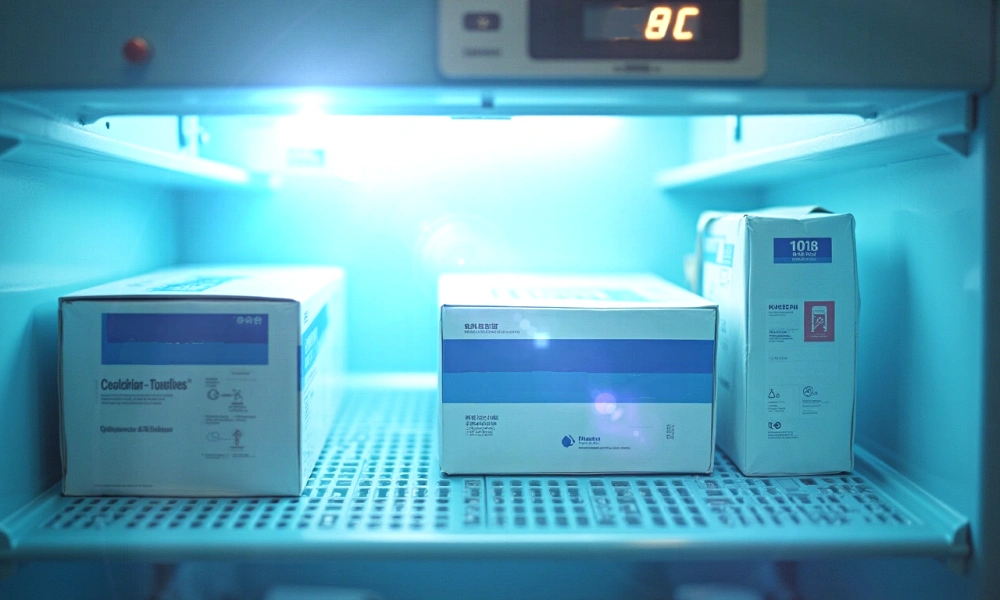
Cold chain storage is the process of maintaining the quality and integrity of medicinal products that require lower than ambient temperatures throughout the supply chain.

This includes the storage and transportation of these products from the manufacturer to the wholesaler, and from the wholesaler to the end user. Cold chain products are often referred to as ‘fridge lines’ and they include vaccines, biologicals, insulins, and some eye drops. These products are highly sensitive to temperature fluctuations and may lose their efficacy or become unsafe if exposed to inappropriate conditions. Therefore, it is essential that wholesalers comply with the good distribution practice (GDP) guidelines issued by the European Commission and the Medicines and Healthcare products Regulatory Agency (MHRA) to ensure product quality and ultimately patient safety.

How to pack a cold chain product for transport

Before transportation, cold chain products should be packed in such a way as to ensure that the required temperatures are maintained throughout the entirety of its journey from the manufacturer to the wholesaler and again when it is transported from the wholesaler to the customer and all in accordance with their labelling requirements.

If you are not using a temperature-controlled vehicle to transport the product, the following steps should be followed when packing cold chain products for transport:


  • Verify the required storage conditions for the product.
  • Use validated insulated containers that can provide adequate thermal protection for the products.
  • Use appropriate cooling elements, such as gel or ice packs, that must be pre-conditioned in advance to the required temperature range.
  • Arrange the cooling elements and the products in a way that ensures uniform temperature distribution and avoids direct contact between them.
  • Fill any empty spaces in the container with suitable filler material, such as bubble wrap or polystyrene chips, to prevent heat transfer and product movement.
  • Seal the container securely and label it clearly with the product name, batch number, expiry date, storage conditions, and any special handling instructions.
  • Monitor the temperature inside the container using a calibrated electronic device, such as a data logger or a min/max thermometer, that can record the temperature history and any deviations.
  • Keep a record of the packing process, including the date, time, personnel involved, container type, cooling elements used, temperature monitoring device used, and any other relevant information.

What NOT to do with a cold chain product

There are some common mistakes that wholesalers should avoid when handling cold chain products. These include:

  • Storing cold chain products outside a pharmaceutical refrigerator or in a domestic refrigerator that is not suitable for medicinal products.
  • Exposing cold chain products to direct sunlight, heat sources, or extreme temperatures.
  • Mixing cold chain products with other products that have different storage requirements or may contaminate them.
  • Overstocking or overcrowding the refrigerator or the container with cold chain products.
  • Overstocking or overcrowding the refrigerator or freezer used to pre-condition cooling elements such as cool packs.
  • Leaving cold chain products out of the refrigerator or the container for longer than necessary during receipt, dispatch, or delivery.
  • Using damaged or expired cold chain products or cooling elements.
  • Ignoring temperature deviations or alarms and failing to take corrective actions.

What happens if the fridge breaks down?

In the event of a refrigerator breakdown or malfunction, wholesalers should take immediate actions to prevent or minimise the impact on the quality of cold chain products. 

These actions include:

  • Transferring the cold chain products or cooling elements to another suitable refrigerator/freezer or container as soon as possible.
  • Quarantining the affected cold chain products until their quality can be assessed by a qualified person or by contacting the manufacturer or supplier.
  • Investigating the cause and extent of the problem and recording all relevant details, such as the date, time, duration, temperature readings, product names, batch numbers, expiry dates, and any other observations.
  • Implementing corrective and preventive measures to restore normal operation and prevent recurrence of the problem.
  • Reporting any significant deviations or incidents to MHRA as required by law.

Correct maintenance of fridges

Wholesalers should maintain their refrigerators in good working order and ensure that they meet the specifications for storing cold chain products. This involves:

  • Using pharmaceutical refrigerators that have a fan-assisted air circulation system, a calibrated electronic min/max thermometer with an accuracy of ±0.5°C, a lockable door, and an alarm system.
  • Placing the refrigerator in a suitable location that is away from direct sunlight, heat sources, moisture sources, and dust sources.
  • Setting the refrigerator temperature between 2°C and 8°C and checking it regularly to ensure compliance.
  • Cleaning and defrosting the refrigerator periodically according to the manufacturer’s instructions and removing any expired or damaged products.
  • Calibrating and verifying the temperature monitoring device at least once a year by an accredited laboratory or service provider.
  • Performing routine maintenance and servicing of the refrigerator according to the manufacturer’s instructions and keeping a record of all maintenance activities.

Conclusion

Cold chain storage is a vital aspect of GDP for medicinal products that require lower than ambient temperatures. Wholesalers should follow the GDP guidelines and best practices to ensure that cold chain products are stored and transported under suitable conditions at all times. This will ensure that the products retain their quality and efficacy and do not pose any risk to the patients.

Further Assistance

Cold Chain storage and Transportation is an area of Good Distribution Practice activity that carries a higher degree of risk to the product integrity and quality.


We are able to advise you on areas of concern in this field, backed up by online courses and materials that you can draw upon to help you resolve any issues you may have. Call us on 0330 133 0920 for an initial consultation or message us using the contact form at the foot of this page.
(Remember to include you name and email address, as we will not be able to respond to enquiries without names and email addresses.)

Below are a selection of links to posts associated with this subject that you can browse.