Dave Rushton
Founder
of Paradigm Shift Consulting Limited.
Dave Rushton is Founder of Paradigm Shift Consulting Limited, a Good Distribution Practice Consultancy.

Registered Office: Paradigm Shift Consulting Ltd,The Old Mill, 9 Soar Lane,Leicester, LE3 5DE, United Kingdom


0330 133 0920

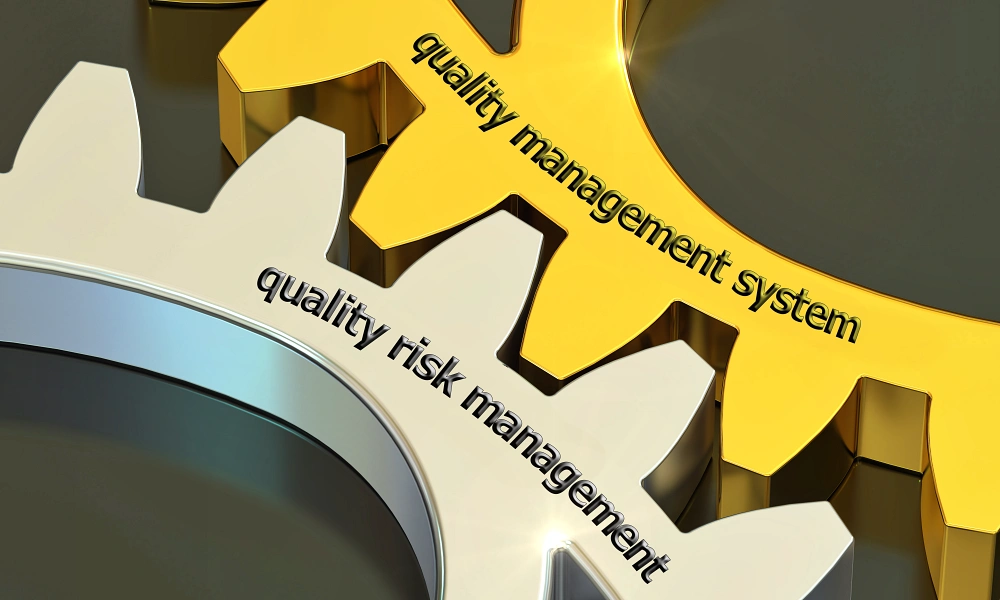
Quality Risk Management (QRM) is not just a “nice-to-have” in Good Distribution Practice (GDP), it is a minimum expectation rooted in National law, guidance, and best practice.
When applied correctly within a GDP Quality Management System (QMS), QRM provides a transparent, objective method to identify, assess, control, communicate, and review risks to the quality of medicinal products throughout the supply chain.
The EU GDP Guideline (2013/C 343/01) defines QRM succinctly and in terms that are directly applicable to medicinal product wholesale distributors:
“Quality risk management is a systematic process for the assessment, control, communication and review of risks to the quality of medicinal products. It can be applied both proactively and retrospectively.”
(EU GDP Guideline 1.5.)
The same guideline emphasises that risk evaluation must be science and experience-based, and that QRM activity should ultimately link back to patient protection:
“Quality risk management should ensure that the evaluation of the risk to quality is based on scientific knowledge, experience with the process and ultimately links to the protection of the patient. The level of effort, formality and documentation of the process should be commensurate with the level of risk.”
ICH Q9 (R1), the international descriptor of QRM principles complements the EU GDP guidelines by describing the lifecycle of risk activity (assessment → control → communication → review) and listing practical tools that are widely used in the pharmaceutical supply chain.

There are many recognised tools for performing risk assessments (RA); choose the one(s) that are most appropriate for the scope, complexity and criticality of the activity:
The above are just some examples of the range of RA tools available. ICH Q9 provides detailed examples and advises on the proportional application of these tools depending on risk level.
SOPs are the frontline mechanism for consistent control; they must reflect risk decisions:

Management review is the executive forum where quality strategy and risk posture are examined.
The GDP Guideline states that management review should include performance indicators such as complaints, deviations, CAPA, changes to processes and self-assessment processes including risk assessments and audits.
Best practice for QRM in management reviews:
Quality Risk Management, when implemented as described in the EU GDP and ICH Q9, transforms a GDP QMS from a collection of procedures into a decision-making system that demonstrably protects patients and supports resilient, efficient distribution.
The regulator’s message is clear: Identify what can go wrong, assess it scientifically, control it proportionately, document the decisions, and keep reviewing.
Remember that distribution risks evolve, and so must your controls.
Do you require assistance with your risk assessments? Could you benefit from a full GDP QMS gap analysis? Could your SOPs benefit from a documentation review?
Contact us today for more information on how Paradigm Shift Consulting can support your operations.
