Dave Rushton
Founder
of Paradigm Shift Consulting Limited.
Dave Rushton is Founder of Paradigm Shift Consulting Limited, a Good Distribution Practice Consultancy.

Registered Office: Paradigm Shift Consulting Ltd,The Old Mill, 9 Soar Lane,Leicester, LE3 5DE, United Kingdom


0330 133 0920

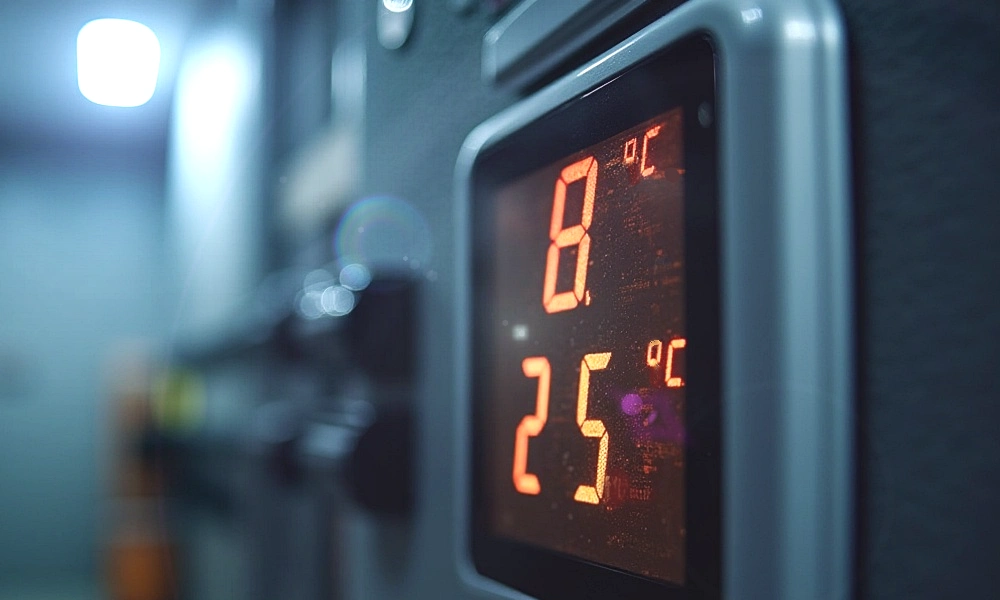
When supporting our clients we are often asked, “What temperature should products in a wholesale area be kept at?” and as with most Good Distribution Practice (GDP) related questions, the answers can vary wildly depending on who you speak to.
The primary response to this question should always be “Under label conditions” or “As per the outer packaging.” However, this can still raise questions, especially when the label conditions or outer packaging state “Store at room temperature” or “This medicinal product does not require any special temperature storage conditions”.
So, what are the temperature ranges that the majority of wholesalers hold their ambient stocks?
Many run the temperature range of 8°C-25°C for ambient, but at Paradigm Shift Consulting we would say that this actually includes two temperature ranges; cool and room temperature, cool being 8°C-15°C and room temperature 15°C-25°C. “
Some people will say cool “does not exist as a temperature range” … but how else should you classify the range of 8°C-15°C?
“Why 8°C-25°C”, you may ask.
It gives latitude and a more manageable variance for many, as not all sites are modern, well insulated or climate controlled. The complication with this range comes when your ambient stock has a range of 15°C-25°C, for example many types of test strips, oncology products and hospital lines. 8°C-25°C is also “Store below 25°C, do not refrigerate.”
We recently saw an invoice from a company with the text “Store at room temperature, 2°C-20°C” and are aware that some wholesalers have been transporting ambient stocks with temperature-controlled courier services at the range of 2°C-8°C.
“Surely this is fine, as it states ‘Store below 25°C’ on the label.”
Well… yes and no.
The products are stored at below 25°C and as long as they don’t freeze surely there is no risk to product quality or efficacy? Perhaps not, but there is an inherent risk with the packaging.
When you have a cold drink you see condensation form on the glass. This can happen with the external packaging of the product. It can cause ink to run or packs to stick together. Damp packaging that has dried can distort.
Can you see where we are going with this?
Products should be transported under label conditions/within the boundaries of the MA.
If you cannot afford a temperature controlled logistics option, perhaps you should consider validated shippers for cold chain or ambient deliveries,
or active shippers that can provide serious protection for your shipment?
There are a wide range of packaging solutions available on the market, just be sure to validate your choice, prior to using to transport medicines!
Your transport solutions should be considered as an extension of your warehouse; temperature mapped, validated and monitored at a minimum summer and winter per route. See our Top Tips for Transport Validation blog.
Do you think temperature-controlled packaging or transport is too expensive for your organisation?
Industry regulators will want to see evidence that your medicinal products storage and transport conditions are in compliance with Chapter 9.2 of GDP Guidelines which stipulates, “The required storage conditions for medicinal products should be maintained during transportation within the defined limits as described by the manufacturers or on the outer packaging.” Can you justify the use of noncontrolled packaging and vehicles to an MHRA inspector? Can you afford NOT to protect your products, patients and your wholesale dealer licence?
Assistance and Support
Paradigm Shift Consulting Ltd is an ISO 9001: 2015 accredited consultancy providing training and quality management services to the pharmaceutical industry.
We can help you with your temperature management needs by:
Our team of experienced consultants can support you as contract Responsible Persons (RPs), Quality Managers, Lead Auditors, RPi’s and interim managers. We can also conduct supported self-inspections of your site or audit your nominated third-party logistics providers (3PLs), following MHRA inspection protocols.
If you are interested in our services or have any questions about temperature mapping or GDP compliance in general, please contact us for a free, short consultation over the phone on 0330 133 0920. Alternatively, you can email on info@paradigmshiftconsulting.co.uk or use the contact form below.
A selection of useful links associated with this subject are here.
EU GDP Guidelines 2013/C 343/01
Chapter 3, section 2, paragraph 1
Why Good Distribution Practice Matters
Online GDP Webinar for RPs and Management
Contracts for Outsourced Activities
MHRA Blog: Temperature Mapping Introduction
Cold Chain Storage of Medicinal Products
